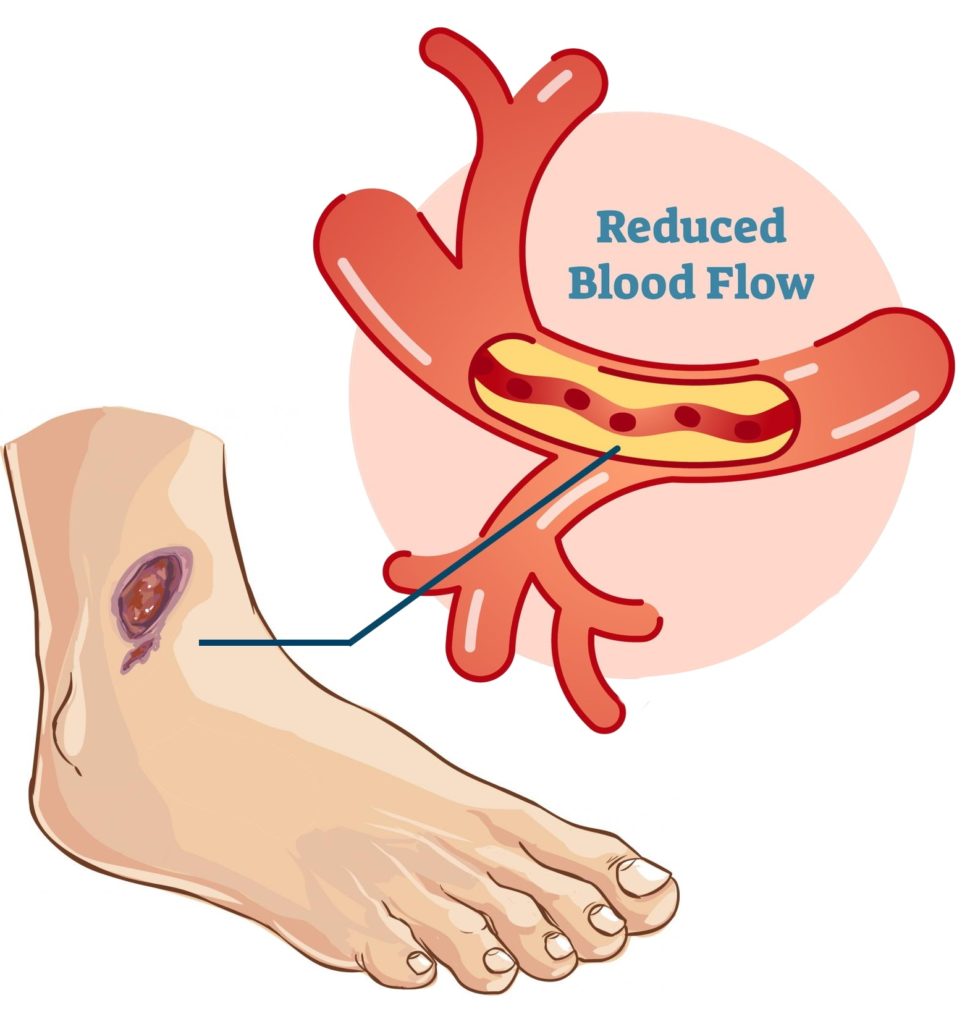
You can expect to see blisters, sores and cuts to heal on their own. In most cases, with a little cleaning and care our bodies do incredible job of healing themselves. If a wound doesn’t heal in four to six weeks or gets more red, swollen and leaking fluid or has a bad odor, this indicates that there’s something more severe going on. If not treated, sores can grow into non-healing foot ulcers, or leg injuries. In extreme instances they can result in the need for amputation.
Get help if you’re not successfully healing your wound.
What causes some wounds to not heal?
There are many common reasons for why a wound doesn’t heal, and understanding them will assist you (and your doctor) to determine the best method to treat it.
You’re at a greater risk of foot and leg wounds that aren’t healed effectively if you suffer from diabetes. High blood sugar can damage nerves, meaning you don’t feel any injuries. Also, it restricts blood flow and makes it difficult for small cuts to heal.
Another major cause is poor circulation, usually related to venous or arterial ulcers. If your arteries or veins aren’t functioning properly, your blood isn’t delivering enough nutrients and oxygen to help heal your skin.
There is also the possibility of developing bedsores (pressure ulcers) when you suffer from mobility issues. These are another type of wound that may be extremely stubborn if not treated appropriately.
Other factors such as age as well as certain medications (like blood thinners) or autoimmune diseases, as well as poor nutrition, can delay healing. Sometimes, it’s a combination of these conditions that cause an injury last.
How long should healing take and what if it isn’t?
It’s normal to be curious about what time healing “should” take. In reality, it is contingent on the nature of wound and your overall health. A minor cut or blister may heal in two weeks. But if you’re dealing with a deeper foot ulcer or leg wound won’t heal, it might take up to 12 weeks if things are going well.
Do not wait to seek professional help if you don’t see improvement within 4 to six weeks. This is the time to see a doctor for wound treatment since the longer a wound is left open, the more risky it can become.
Find the best help for you
If the sore doesn’t heal It’s not simply “bad luck” or a problem that you can ignore. the body’s signals are telling you that it requires help. What’s the positive side? The right treatment and expertise could make a difference. At our clinic, we are experts in the treatment of non-healing foot ulcers and leg wounds, as well as working with your other medical professionals to develop an individual plan that gives your body the best opportunity to heal and prevent leg amputations.
Whether it’s advanced wound dressings, the ability to restore blood flow, or special therapies like hyperbaric oxygen There are solutions there. And we’ll work with you throughout the way because no one should be forced to take on an injury that isn’t healing on its own.
Final Thoughts
A wound that will not heal affects you in more ways than one. It can alter your life. There is an option. If you’re fed up of having to deal with a leg wound that isn’t healing, an open sore that doesn’t heal or a painful foot ulcer, don’t hesitate to seek assistance. If you get in touch for help, the sooner your wound will heal and you’ll be able to get back to living the life you’ve earned.